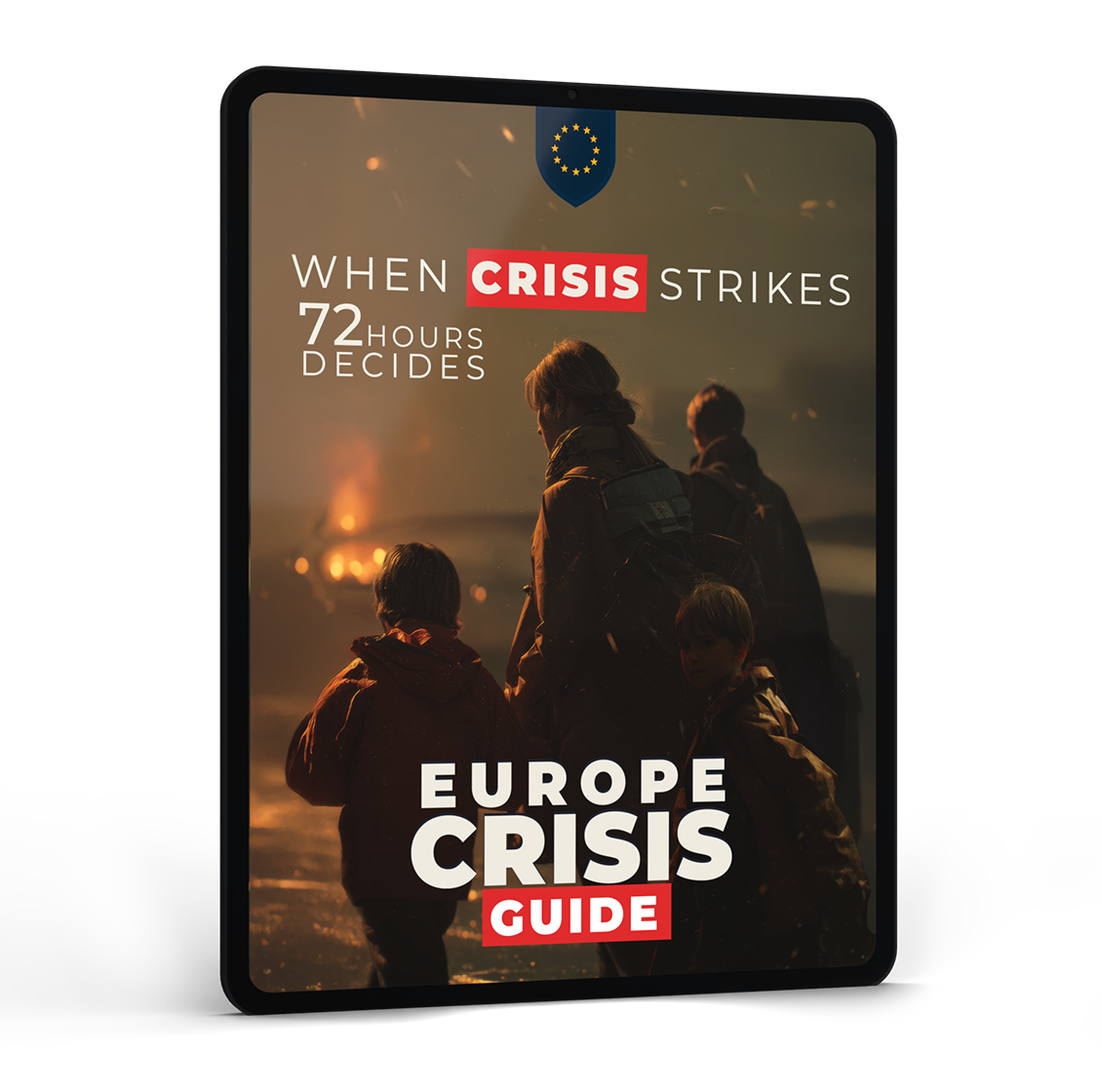
Former Military Intelligence Reveals the Exact Blueprint That Could Save Your Family When Government Response Fails
BUY "EUROPE CRISIS GUIDE" NOW⚠️ SECURITY ALERT:
Recent cyberattack nearly shut down power to 4.2 million European homes. Experts warn: "It's not a question of if, but when."
SECURE YOUR FAMILY NOWYour devices dead, refrigerator warming, heating systems offline
Phone networks down, internet disabled, no way to contact loved ones
Electronic payments frozen, ATMs offline, no access to your money
Police and ambulance overwhelmed, average response time: 72+ hours
In Europe right now, this scenario isn't just possible—it's becoming probable.
Military and intelligence officials are already preparing their own families.
Shouldn't you?
This isn't generic "prepper" advice from American doomsday enthusiasts. This is a meticulously researched, Europe-specific protocol developed with military precision to protect your family during the critical first 72 hours of any crisis—whether it's a cyberattack, infrastructure failure, or regional conflict.
Tailored specifically for European urban and suburban environments, not rural American scenarios
Refined through real emergency situations including the Kyivstar Network Attack where 24 million lost communications
Includes considerations for children, elderly, and pets—because your whole family matters
We offer a 60-day satisfaction guarantee. If you are not satisfied with your purchase, you may request a refund within 60 days of the purchase date.
European Energy Crisis (2022-2023)
During the winter blackouts that hit Eastern Europe last year, our neighborhood in Warsaw lost power for 37 hours. While others scrambled to find warmth and preserve food, we implemented the crisis guide protocol. Our battery backup system, pre-positioned supplies, and alternative cooking methods made all the difference. My elderly parents stayed warm and well-fed while we watched chaos unfold around us. This preparation literally saved my father, who depends on refrigerated medication.
Mediterranean Wildfires (Summer 2023)
When the wildfires approached our village near Athens last summer, evacuation orders came with just 20 minutes' notice. Thanks to having implemented the evacuation protocol, our family didn't waste precious time deciding what to take or where to go. We had our essential documents ready, evacuation routes mapped, and emergency bags packed. Our neighbors who hadn't prepared lost irreplaceable items and faced dangerous last-minute decisions. The calm efficiency our family displayed during this crisis came directly from following this system.
Baltic Region Cyber Incident (January 2024)
Working in IT in Estonia, I witnessed firsthand the banking and communications disruption from the coordinated cyber attacks earlier this year. For three days, payment systems were down, and mobile networks operated intermittently at best. Having followed the crisis guide meant our family had sufficient cash reserves and alternative communication methods ready. We even assisted neighbors who couldn't access funds or contact relatives. What impressed me most was how accurately the guide predicted the exact sequence of infrastructure failures.
SECURE YOUR FAMILY'S PROTECTION BEFORE THE NEXT CRISIS EVENT.
This isn't about building bunkers or preparing for the apocalypse. This is practical, rational preparation for scenarios that security experts consider inevitable in the next 24-36 months. The entire protocol can be implemented discreetly in a standard European apartment.
During the 2021 German floods, emergency services were overwhelmed for days. During the 2022 energy crisis, governments struggled to respond. The first 72 hours of any crisis are critical, and you cannot rely on external help during this window.
Cyber attacks don't recognize borders. Infrastructure failures cascade across regions. Supply chains are interconnected. Even the "safest" European countries have experienced significant disruptions in recent years.
Our European-specific approach is designed for apartment living. We show you how to maintain essential supplies in minimal space - often using areas you didn't know you had available.